
e-Samudra
e-Samudra is a flagship digital transformation initiative of the Ministry of Ports, Shipping and Waterways aimed at creating a unified, transparent, and technology-driven maritime governance ecosystem for India. Developed under the Directorate General of Maritime Administration (DGMA), the platform consolidates more than 15 major regulatory domains, including seafarer services, ship registration and mortgages, charter permissions, vessel surveys and certifications, ports, recognised organizations, multimodal transport operators, maritime service providers, tonnage taxation, medical practitioners, ISM/DSM audits and financial management into a single digital interface. Launched in its beta version on 08th August 2026, e-Samudra replaces fragmented legacy systems and manual processes with end-to-end digital workflows, automated validations, online approvals, real-time tracking, dashboard and integrated data repositories.
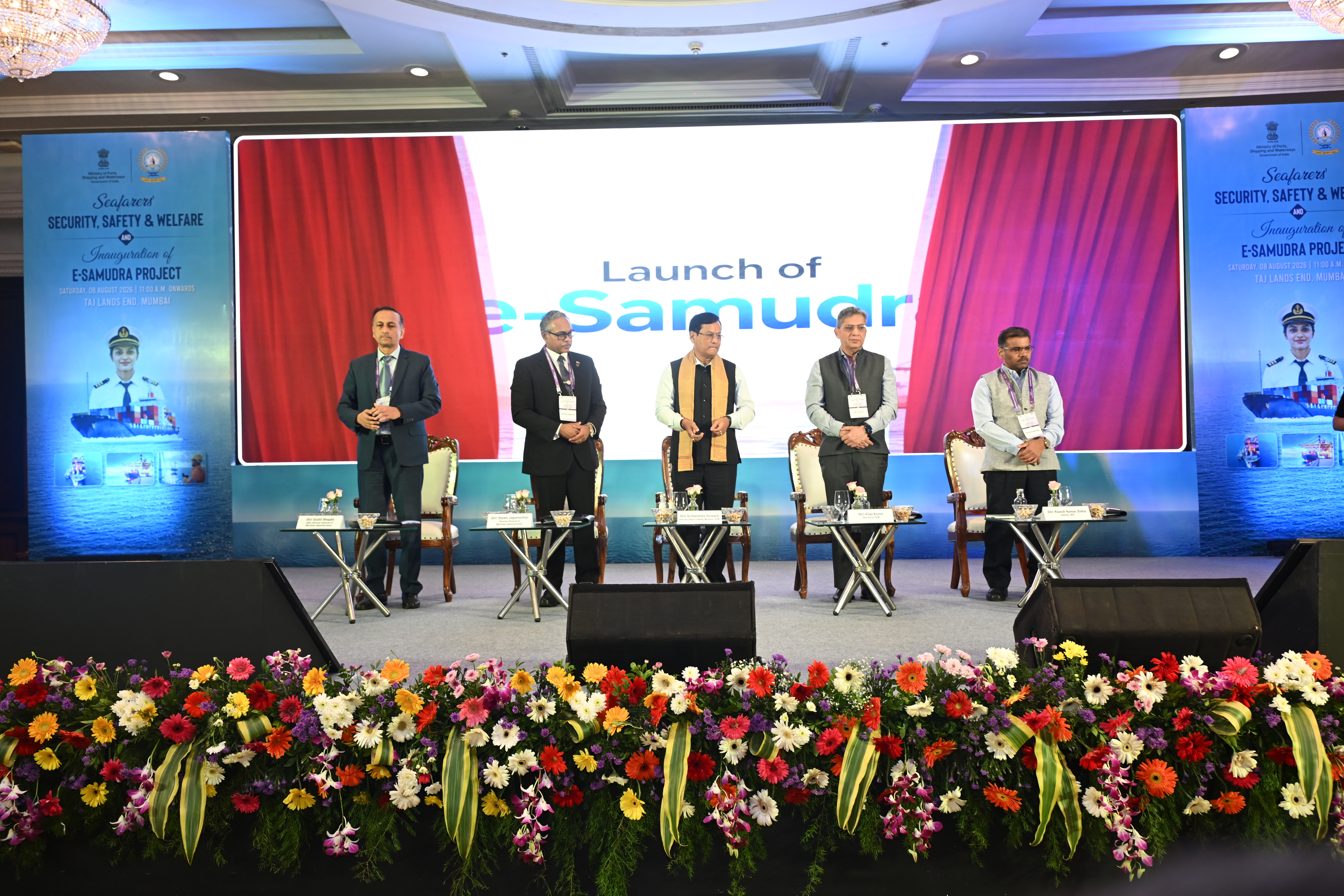
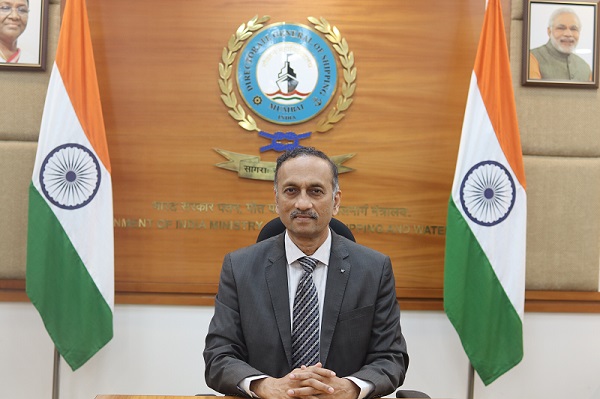
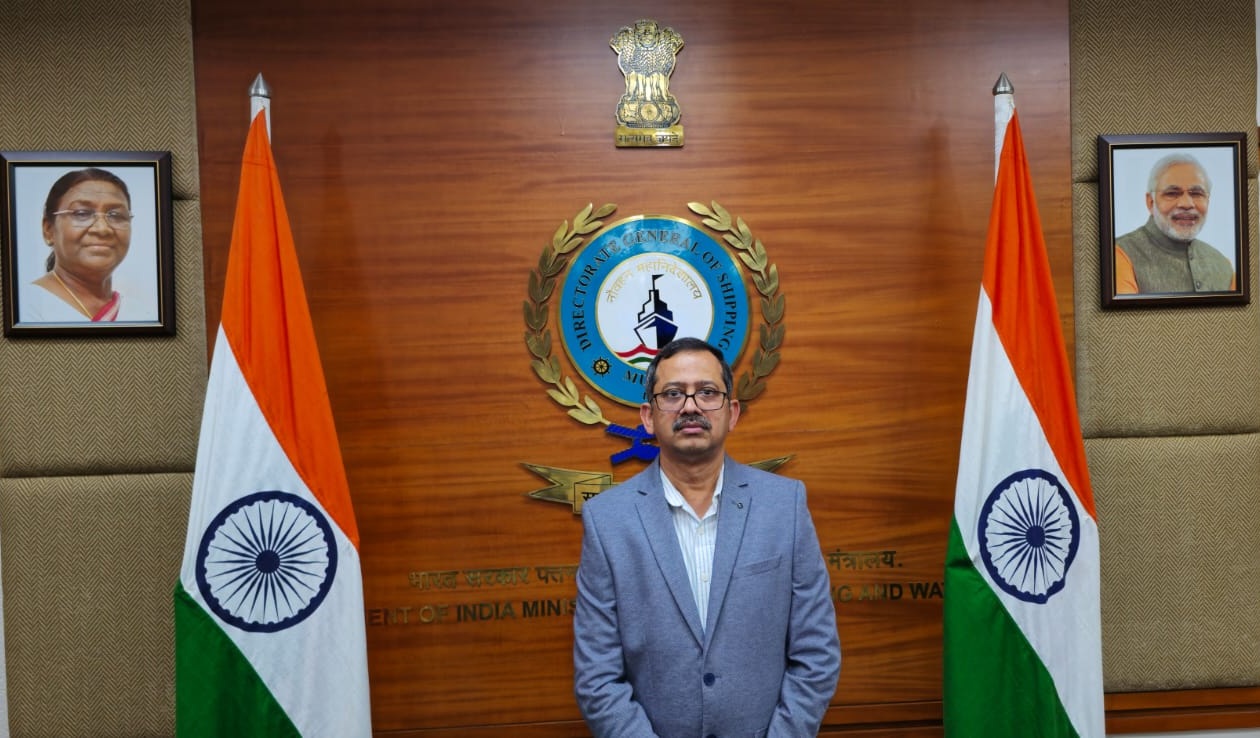
Hon'ble Union Minister Shri Sarbananda Sonowal Launches E-Samudra on 08 August 2026
Objective
The primary objective of the e-Samudra project is to implement a comprehensive IT transformation that enables the digitization of all organizational processes. The project aims to achieve several key goals:
- i. Transitioning to a paperless system to enhance transparency and expedite service delivery.
- ii. Automating all functions related to shipping and seafarer operations, as well as internal administration and maintenance.
- iii. Enhancing existing e-Governance operations and processes, improving user interactions, integration channels, and overall ease of doing business.
- iv. Assisting the Ministry of Ports, Shipping, and Waterways, along with DGMA, in improving the Data Governance Quality Index (DGQI).
The successful implementation of the DGMA e-Samudra is anticipated to create a streamlined flow of information, thereby enhancing decision-making capabilities within the organization. This transformation is expected to lead to increased customer satisfaction, improved financial performance, greater transparency, and enhanced consistency in business operations and processes.
The scale of e-Samudra demonstrates the extensive scope of this digital transformation. The platform comprises 15 integrated modules covering more than 70 processes and sub-processes. It is designed to support over 6,000 concurrent users and incorporates more than 17 years of migrated data. The system also hosts over 1,600 Indian-flag vessel profiles and serves more than 3.2 lakh seafarers. These figures reflect the platform’s importance as a central digital repository and service-delivery mechanism for maritime governance.
The impact of e-Samudra is particularly evident in the improvement of service-delivery timelines. A total of 69 services were mapped for timeline review, as compared with only two services in 2018. Of these, 16 services are now delivered within 24 hours. Further, 38 services achieved a reduction of more than 50 per cent in processing time. Among the services assessed, 24 recorded a time reduction of 50 to 69 per cent, 11 achieved a reduction of 70 to 89 per cent, and three recorded a reduction of 90 to 100 per cent.
The platform has produced visible improvements in the turnaround time of several important maritime services. Ship registration, which previously required seven days, can now be completed within 24 hours. Recognition or renewal of Multimodal Transport Operators has been reduced from 20 days to 24 hours, while INDoS corrections have been reduced from three days to 24 hours. The processing period for Continuous Discharge Certificate (CDC) issuance has decreased from 30 days to three days. Similarly, the timeline for plan approvals has been reduced from 30 to 60 days to approximately 21 days.
Overall, e-Samudra has strengthened maritime governance by enabling faster approvals, improving the ease of doing business, establishing a single source of reliable data, ensuring greater transparency in workflows, and supporting stronger regulatory oversight. The platform marks a significant shift towards efficient, accountable, data-driven and citizen-centric maritime administration.
Overview
The DGMA e-Samudra system is designed to transform the Directorate General of Shipping’s (DGMA) e-Governance services into a fully paperless environment, significantly enhancing the digital services available to DGMA and its associated offices. This initiative will cater to various stakeholders, including shipping entities, seafarers, multimodal transport operators, DGMA-approved medical practitioners, and shipyards. The project will involve the development of 15 distinct modules, implemented in accordance with the latest cybersecurity standards established by the Ministry of Electronics and Information Technology (MeitY).
The e-Samudra initiative represents a holistic e-Governance solution aimed at digitizing and integrating all aspects of maritime administration in India.
The modules included in this note along with their brief description are as follows:
-
1. Seafarer Profile and Available Services: The module serves as the backbone of the e-Samudra initiative, providing a centralized digital repository for all seafarer-related data. Integrated with legacy and new systems, it ensures seamless synchronization of personal, educational, training, and certification details. It enables creation and updating of seafarer profiles for Indian and foreign nationals through automated data retrieval from connected systems like the DGMA e-Governance, Examination, and Training databases. The module also digitizes end-to-end management of Continuous Discharge Certificates (CDC) and Certificates of Proficiency (CoP), Competency (CoC), and other certifications, enabling online applications, automated verification, and digital issuance. By integrating with RPS companies, Maritime Training Institutes, and the Mercantile Marine Department, it enhances transparency, efficiency, and compliance while reducing manual intervention and processing time.
-
2. Shipping Entity and Available Services: This module provides a unified digital platform for registration, verification, and management of shipping companies, cooperatives, and foreign flag entities. It supports both data migration for existing users and online registration for new entities, ensuring seamless onboarding and structured access to DGMA services. Integrated with the Vessel Registry, it enables automated creation and activation of ship and entity profiles, promoting transparency, data consistency, and efficient regulatory compliance. The module encompasses key sub-modules, including Plan Approval, Tonnage Measurement, Ship Registration, NOC from SMO/SWFS/SPFO, Charter Permissions & Licenses, Exemptions, Dispensations & Extensions, and Tonnage Taxation—together streamlining plan submissions, certification, chartering, and compliance processes. By digitizing these workflows, the system enhances efficiency, accountability, and service delivery across the maritime ecosystem under e-Samudra.
-
3. Survey and Certification: The Module enables comprehensive digital management of vessel surveys and certifications under the e-Samudra platform. Covering all vessel categories—cargo, passenger, fishing, high-speed craft, and others—the module digitizes end-to-end workflows from application submission, inspection scheduling, and survey reporting to certificate issuance and MIS generation. Integrated with MMDs and Recognized Organizations, it ensures compliance with national and IMO regulations, improves transparency, and enhances operational efficiency. Automated notifications, structured approval workflows, and centralized data storage minimize manual processing and strengthen oversight of maritime safety and certification activities.
-
4. ISM/ DSM Audits: The system shall have end-to-end management of International Safety Management (ISM) and Document of Compliance (DOC) audits for shipping companies, ensuring adherence to safety, operational, and pollution-prevention standards. The module enables empanelment of auditors, scheduling and tracking of interim, initial, intermediate, and renewal audits, and generation of Safety Management Certificates (SMC) for passenger, cargo, high-speed, and other vessel types. Integrated workflows streamline document verification, audit reporting, and approvals by ISM Cell In-Charge and Chief Surveyor, while maintaining audit trails, notifications, and regulatory compliance. By centralizing all audit-related processes, the module enhances efficiency, traceability, and transparency for both shipping companies and the Directorate.
-
5. Ports: The module will digitize and streamline port regulatory and operational processes, enhancing compliance, safety, and efficiency. It shall support creation and management of comprehensive port profiles, ensuring up-to-date infrastructure and compliance records. Sub-modules cover NSPC Clearance for navigational safety, ISPS Audits for port security, Port Reception Facility (PRF) Audits for environmental compliance, and Shore Electricity Supply management for sustainable operations. By centralizing workflows, automating approvals, and maintaining digital records, the module ensures transparency, accountability, and operational efficiency for all ports under DGMA.
-
6. Service Providers: This Module of e-Samudra will digitize and automate the lifecycle of maritime service provider approvals, audits, and certifications, enhancing transparency, efficiency, and regulatory compliance. Key sub-modules include IMSBC Laboratory Approvals for cargo testing, FFA/LSA Service Station Registration and Survey, Verified Gross Mass (VGM) Provider Management, Bunker Supplier Accreditation and Audits, Insurance Provider Approvals, and L/B Davit Service Station (DSS) Management. Each sub-module supports end-to-end digital workflows—from profile creation and application submission to approval, renewal, and compliance tracking. By integrating these processes, the module shall minimize manual intervention, maintain traceable audit trails, and strengthen the DGMA’s oversight and operational efficiency across maritime service providers.
-
7. Sailing Vessel Seaman: This Module shall provide a streamlined digital framework for managing the registration and identity processes of sailing vessel seamen. It will allow creation and maintenance of individual seaman profiles, along with issuance, renewal, duplication, and cancellation of ID cards through a secure online interface. The Tindal Certification and Sign On/Off sub-module is expected to facilitate the management of crew certifications and Sign On/Off records, ensuring accurate tracking of seafarer movements and compliance with regulatory standards. These functionalities would improve transparency, enhance operational efficiency, and provide a reliable mechanism for both seamen and the Directorate General of Shipping to manage seafarer records effectively.
-
8. Recognized Organization: The Module shall provide a unified interface between the Directorate General of Shipping (DGMA) and ROs for carrying out delegated statutory functions. It would allow DGMA to onboard new or existing ROs through a structured profile creation process, enabling future operations such as authorization, vessel data mapping, and issuance of statutory certificates, with all actions linked to the RO’s profile for traceability and regulatory oversight. The module is expected to support certificate generation by ROs, audits conducted by the Competent Authority including document review, on-site evaluation, and tracking of non-conformances and automated workflows for corrective action verification. Additionally, it shall facilitate periodic renewal of RO agreements, typically valid for five years, with six-month prior alerts, visual guidance through renewal stages, and provisions for amendments during the contract period, thereby ensuring transparency, compliance, and continuity of operations.
-
9. Medical Practitioner: Here, there shall be management of registration, approval, renewal, and monitoring of DG-approved medical practitioners through a secure online platform. It would allow practitioners to submit applications, issue medical certificates, and maintain digital records, while enabling DGMA to track renewals, schedule surprise audits, and ensure compliance, quality, and transparency in all medical certification processes.
-
10. Multimodal Transport Operators: The module shall provide a fully digital framework for managing MTO registration, renewal, modifications, compliance, appeals, and grievance redressal under the MMTG Act, 1993. It would enable applicants to submit and track registration and renewal forms, update license details, respond to Show Cause Notices, file appeals, and raise grievances, while DGMA officials can review, approve, monitor, and maintain complete audit trails—ensuring efficiency, transparency, and regulatory compliance throughout the MTO licensing lifecycle.
-
11. Finance, Accounts, Audit and Public Procurement: The F.A.A.P.P. Module shall provide an integrated digital platform for managing DGMA financial, audit, and procurement activities. Upon commissioning, it will support budget preparation, allocation, and monitoring; track and resolve audit observations; manage accounts with PFMS integration; and handle end-to-end public procurement processes, including bidding, contract issuance, and performance tracking. The module shall enhance transparency, efficiency, and accountability, providing a secure and auditable environment for all related operations.
-
12. Common Processes for Availing Services on e-Samudra: The common processes such as Creation of Profile for Existing Users, Creation of Profile for New Users, Correction of Profile and Feedback/Complaint for external stakeholders of the portal, i.e. The seafarer, shipping entities, service providers etc.
-
13. Common Processes for Departments using e-Samudra: The common processes such as Profile Creation, Application Approvals, Delegation of Access, Sending a Query to the Applicant, Suspension/Debarment of Seafarer, Suspension/ Debarment of Officer only for the internal stakeholders of the portal, i.e. DGMA and its allied offices authorized officials.
-
14. Shipbuilding Financial Assistance Portal (SBFAP): The SBFAP provides a comprehensive digital framework to manage shipyard registration, financial assistance applications, and fund disbursement in a transparent, accountable, and structured manner. Shipyards are able to register, apply for In-Principle Approval, submit Novation Requests, and track budget allocations. The portal shall also support phased financial assistance requests, including pre- and post-audit disbursements, with pending integration to PFMS for smooth fund transfer. Through evaluator management, audit trails, automated notifications, and real-time dashboards, the system shall ensure timely, trackable, and compliant processing, strengthening oversight, financial discipline, and operational efficiency within India’s shipbuilding sector.
E-Samudra
| No. of Year | Title | Issue Date | Downloadd/View |
|---|