

DGMA Coastal Branch FAQs
Coastal shipping refers to the movement of passengers and cargo by sea between ports located within India's territorial waters. It forms an important component of the country's logistics network by providing a cost-effective, energy-efficient and environmentally sustainable mode of transport.
DGMA is responsible for administering and implementing the Coastal Shipping Act, 2025, monitoring compliance, maintaining the National Database of Coastal Shipping, promoting coastal shipping initiatives, developing strategic plans and facilitating stakeholder engagement across the coastal shipping ecosystem.
The Coastal Shipping Act, 2025, which replaced the coastal trade provisions of the Merchant Shipping Act, 1958. Allied legislation includes the Merchant Shipping Act, 2025 and the Indian Port Act, 2025.
The Coastal Shipping Act, 2025 provides the legal framework for regulating coastal trade in India. The Act covers vessel licensing, safety and operational compliance, the National Database of Coastal Shipping (NDCS), and preparation of the National Coastal and Inland Shipping Strategic Plan.
The Act seeks to promote safe, efficient and sustainable coastal shipping, strengthen maritime connectivity, facilitate integration with inland waterways, enhance regulatory oversight and support the growth of coastal cargo movement.
The National Database of Coastal Shipping (NDCS) is a national information system envisaged under the Coastal Shipping Act, 2025 to maintain data relating to coastal vessels, voyages, cargo movement and coastal shipping activities. The database supports policy formulation, sectoral planning and performance monitoring.
The NDCS helps improve data-driven decision-making by providing reliable information on vessel movements, cargo flows and sector performance. It enables better planning, monitoring and implementation of coastal shipping initiatives across the country.
The National Coastal and Inland Shipping Strategic Plan is a long-term roadmap for the development of coastal shipping and inland water transport. It is intended to guide infrastructure development, policy interventions, modal shift initiatives and stakeholder coordination.
The Coastal Cargo Promotion Scheme (CCPS) is a proposed incentive-based scheme aimed at encouraging the movement of domestic cargo through coastal shipping. The scheme is designed to support modal shift from road and rail to coastal shipping and strengthen the coastal logistics ecosystem.
Subject to the final scheme guidelines, eligible cargo owners, vessel operators and other approved beneficiaries may avail incentives under the scheme upon meeting prescribed eligibility conditions.
Coastal shipping can help reduce logistics costs, improve fuel efficiency, decongest road and rail networks, promote sustainable transportation and strengthen multimodal logistics connectivity.
The Coastal Shipping Act, 2025 provides for licensing requirements for vessels engaged in coastal trade. The licensing framework aims to ensure lawful operation, compliance with regulatory requirements and proper oversight of vessel activities.
Foreign-flag vessels may be permitted to participate in coastal trade in accordance with applicable provisions of the Coastal Shipping Act, 2025, cabotage policies and licensing requirements issued by the Government of India.
Cabotage reserves Indian coastal trade for Indian-flagged vessels. Foreign-flagged vessels require case-by-case DGMA approval, granted when no suitable Indian tonnage is available, the cargo is specialised or bulk, and the shipper submits documentation confirming non-availability. Permissions are time-bound and vessel-specific.
The Right of First Refusal (RoFR) is a mechanism prescribed under applicable Government guidelines that provides Indian vessels an opportunity to undertake certain coastal trade activities before permission is granted to foreign-flag vessels.
Typically, the following documents are required:
- Vessel particulars
- Cargo details
- Confirmation of non-availability of Indian tonnage
- Identity / authorisation documents of the applicant
Ensure all information is complete before submission to avoid delays.
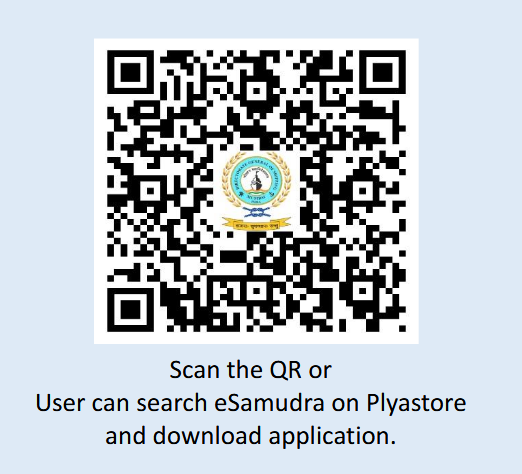
eSamudra handles online applications for Sailing Vessel Seaman Identity Cards, coastal voyage reports and manifests, chartering permissions for foreign vessels, and coastal trade approvals.
The following reporting obligations apply:
- Pre-arrival and departure notifications to the port authority
- Cargo manifests
- AIS transponder activation throughout the voyage
- Periodic NDCS reporting to DGMA
All documentation is submitted through the Maritime Single Window (MSW).
The Maritime Single Window (MSW) is a unified digital portal for submitting all port entry, cargo and crew documents to a single point instead of multiple agencies. It reduces documentation burden and vessel turnaround time.
Portal: https://nlpmarine.gov.in
The Protocol on Inland Water Transit and Trade (PIWTT) designates specific river waterways for cargo movement between India and Bangladesh, with reciprocal port access and streamlined customs procedures. DGMA Coastal Branch coordinates India's participation in liaison with MoPSW and MEA.
BIMSTEC is a Bay of Bengal grouping of seven nations: Bangladesh, India, Myanmar, Sri Lanka, Thailand, Nepal, and Bhutan. The BIMSTEC Maritime Transport Cooperation Agreement (BIMMS) harmonises regional coastal shipping regulations and reduces freight costs, positioning India's eastern and southern ports as Bay of Bengal hubs.
DGMA coordinates maritime transport cooperation arrangements with BIMSTEC Member States and partner countries to strengthen regional connectivity, facilitate maritime trade, harmonise procedures and support cross-border coastal shipping.
Yes, both. For sailing vessels, this includes SIC (Seaman Identity Card) issuance and applicable rule administration. Fishing vessel matters are handled under provisions of the Merchant Shipping Act and associated rules.
A Tindal Certificate is a competency certificate issued to qualified personnel serving on sailing vessels. The certification process ensures that candidates possess the necessary skills, experience and qualifications required for vessel operations.
Vessel owners, operators, shipping companies, charterers, port authorities, government agencies, and maritime organisations – for any coastal shipping matter within DGMA's jurisdiction.
Yes, where permitted under applicable procedure, along with the necessary authorisation documents.
Through the designated online portal (where applicable) or by contacting the office processing the application directly.
Directorate General of Maritime Administration (DGMA), Coastal Branch
Address: 9th Floor, Beta Building, I-Think Techno Campus, Kanjurmarg (East),
Mumbai – 400042
Phone: +91-22-25752040 / 25752041
Email: coastal-dgs@nic.in
Website: https://dgma.gov.in/coastal-shipping
eSamudra Portal: https://esamudra.dgshipping.gov.in
Office hours: 9:30 AM – 6:00 PM (Monday to Friday, except Government holidays)
Grievances related to coastal shipping matters may be submitted through the following channels:
- CPGRAMS (Centralized Public Grievance Redress and Monitoring System): pgportal.gov.in
- RTI Online Portal: rtionline.gov.in
- Direct correspondence to the Coastal Branch, DGMA, Mumbai.
- e-Navik Grievance Redressal Mechanism available on the DGMA website for maritime-related complaints.
Applicants should ensure that all supporting documents, vessel particulars, ownership details and other information prescribed for the relevant service are complete and accurate before applying, to avoid unnecessary delays.
If an incorrect or incomplete application has been submitted, the applicant should immediately inform the concerned office and follow the prescribed procedure for correction or resubmission, as applicable.
Applicants experiencing technical issues should first verify that the information entered is complete and correct. If the issue persists, they may contact the designated helpdesk or the concerned DGMA office for assistance.
Yes. The Coastal Branch regularly coordinates with Mercantile Marine Departments (MMDs), Port Authorities, State Maritime Boards and other Central and State Government agencies for effective implementation of coastal shipping policies and regulatory requirements.
The Coastal Branch assists in the formulation, implementation and review of policies and initiatives aimed at promoting coastal shipping, improving maritime connectivity and supporting sustainable transport.
Coastal shipping provides an energy-efficient mode of transportation that helps reduce congestion on roads and railways, lowers logistics costs and contributes to reduced emissions by shifting cargo movement to sea routes.
Stakeholders are advised to regularly visit the DGMA website (https://dgma.gov.in) for the latest circulars, notifications, guidelines, advisories and updates relating to coastal shipping services.
Common Queries Related to Sailing Vessel Seaman ID Cards
A Sailing Vessel Seaman Identity Card (SIC) is an official document issued by the Directorate General of Shipping (DGS) to crew members employed on sailing vessels. It serves as a valid identity and occupational proof for sailors.
Crew members working aboard sailing vessels registered under the Merchant Shipping (Sailing Vessels) Rules, 1997, who are actively involved in coastal or international sailing operations.
The Directorate General of Shipping issues four types of identity cards:
- New Identity Card: For first-time applicants.
- Renewal of Identity Card: Upon expiration of the existing card.
- Duplicate Identity Card: In case the original is lost, stolen, or destroyed.
- Replacement of Identity Card: In case of damage or significant personal data changes.
You can apply online through the e-Samdura platform, hosted by the Directorate General of Shipping (https://www.dgshipping.gov.in). Follow the step-by-step application procedure available on the website.
Typically, the following documents are required:
- Application Form (completed online via e-Samdura)
- Proof of identity (e.g., Aadhaar, passport)
- Proof of employment or service onboard a sailing vessel
- Recent passport-sized photographs
- Medical fitness certificate, if applicable
The card is typically valid for a specified period indicated at the time of issuance, commonly five years. After this period, it must be renewed.
Renewal applications can be made online via the e-Samdura system. Provide your current identity card details along with updated employment proof, personal information, and any other documents requested.
Immediately report the loss to the nearest police station, obtain a lost-report FIR, and apply online through e-Samdura for a duplicate card, uploading a copy of the FIR and necessary documents.
Yes, there are nominal fees associated with issuance, renewal, and replacement of cards. These fees are detailed on the DGS website and must be paid online during the application process.
The status of your application can be checked online through the e-Samdura portal using your application reference number.
The Sailing Vessel Seaman Identity Card is primarily for identification purposes related to sailing activities and does not replace a passport. However, it can facilitate shore leave, port entry, and related administrative procedures in designated coastal and international maritime areas.
For further assistance, contact:
Directorate General of Shipping (Coastal Branch)
Address: 9th Floor, Beta Building, I-Think Techno Campus, Kanjurmarg (East),
Mumbai – 400042
Phone: +91-22-25752040 / 41
Email: dgship-dgs@nic.in
Official circulars (e.g., Circular Nos. 11/2020 and 30/2020) can be accessed online at DGS Circulars.