
Collaborations and Partnerships
The Engineering Wing actively collaborates with both international and domestic organizations to foster innovation, environmental sustainability, and technical advancement in maritime operations.
Key partnerships include
- Indo-Danish Green Shipping Centre of Excellence
A strategic bilateral initiative aimed at promoting sustainable shipping practices through technology transfer, capacity building, and policy alignment between India and Denmark.
- IMO Collaboration Projects
The Wing is leading India's engagement in several major IMO-led environmental initiatives, including:
- GreenVoyage2050 - Advancing decarbonization pathways for the global shipping industry through pilot projects, technical cooperation, and policy support.
- RegLitter - Strengthening regulatory frameworks to tackle marine litter, including microplastics, through targeted assessments and implementation plans.
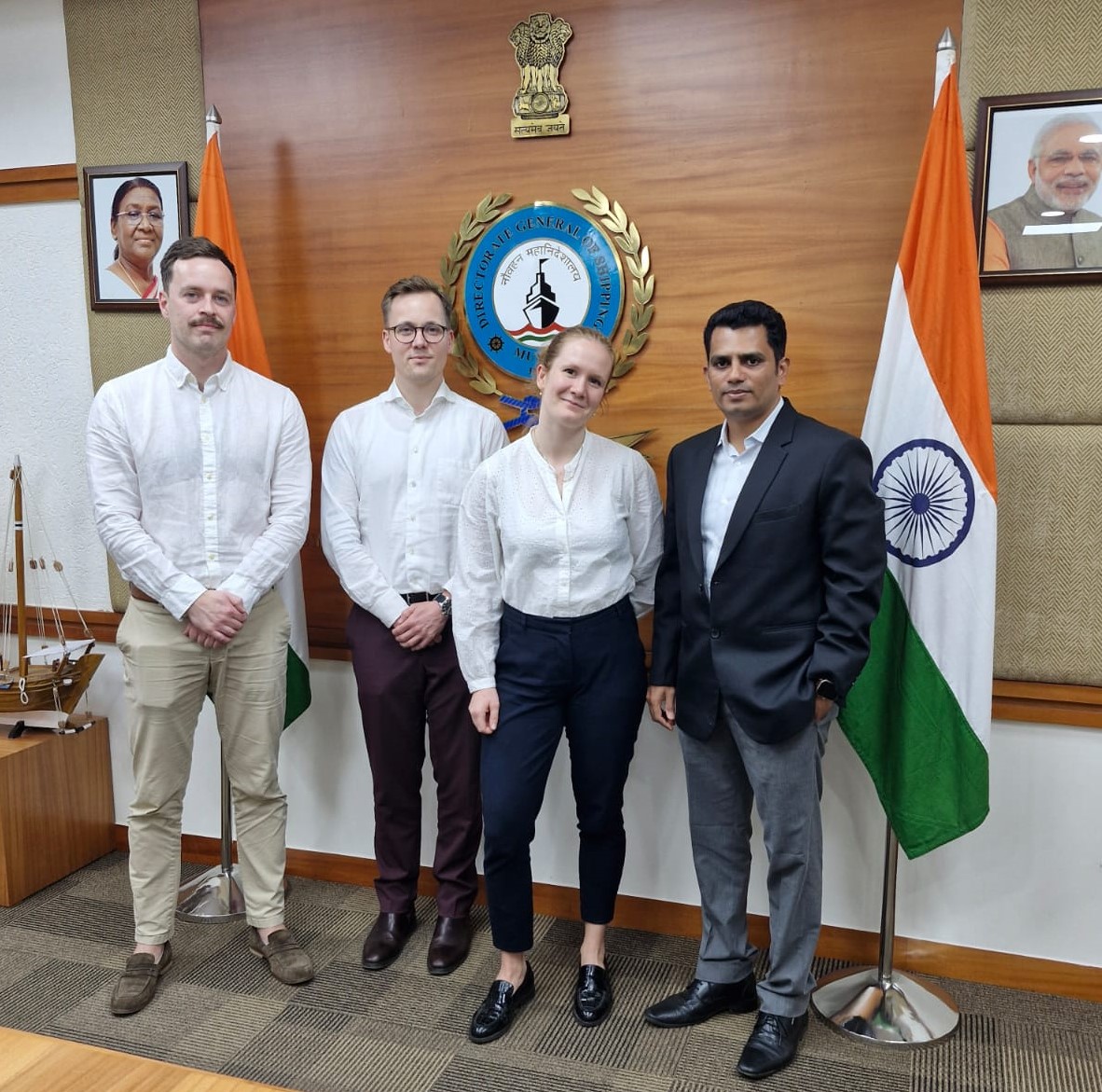
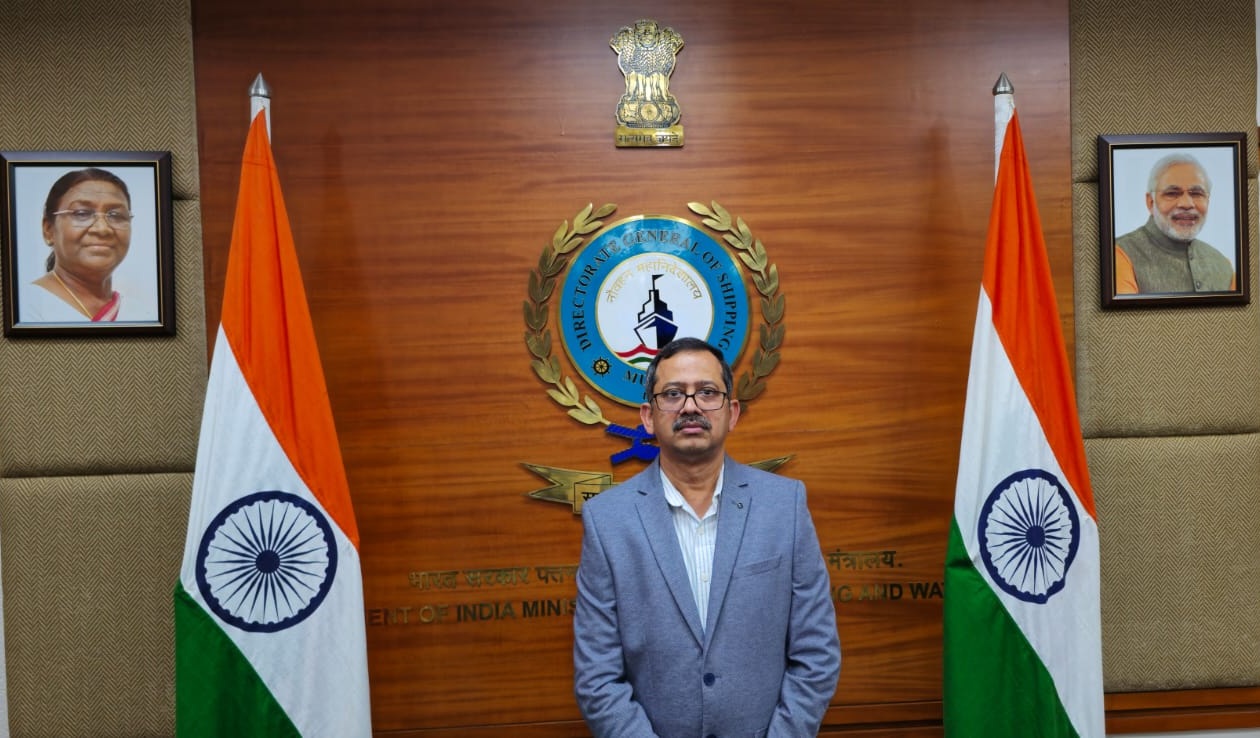
Indo-Danish COE bilateral workshop
21-02-2025
- GloLitter Partnerships - Addressing marine plastic litter from ships and port operations by promoting sustainable waste management practices and capacity building.
- GloNoise - Working to mitigate underwater noise pollution from ships by developing guidelines, technical standards, and awareness tools.
Through strategic partnerships and Memoranda of Understanding (MoUs), the Engineering Wing continues to build institutional linkages that contribute to the advancement of India's maritime sector and support the broader objectives of safe, sustainable and technologically progressive shipping.
DGMA – NCoEGPS – Smart Freight Centre (SFC)
The Directorate General of Maritime Administration (DGMA) entered into a Memorandum of Understanding (MoU) with the National Centre of Excellence in Green Ports & Shipping (NCoEGPS), TERI and the Smart Freight Centre (SFC) on 3 August 2026 to establish a collaborative framework for accelerating maritime decarbonisation in India. The partnership supports the implementation of India's maritime sustainability priorities, including the National Maritime Decarbonisation Policy Framework (NMDP), through technical expertise, global collaboration, pilot and demonstration projects, capacity building and engagement with industry and other stakeholders.
Scope of Collaboration
The collaboration covers key areas across the maritime value chain, including:
- Green Shipping: Maritime emissions accounting, MRV and transparency frameworks, green shipping corridors, carbon performance benchmarking and low- and zero-emission vessel solutions.
- Green Ports: Port decarbonisation, emissions measurement and benchmarking, digital emissions monitoring, renewable energy integration and shore power.
- Green Fuels: Lifecycle emissions accounting, alternative marine fuel certification, green fuel corridors, bunkering ecosystems and infrastructure readiness.
- Green Ship Recycling: ESG benchmarking, circular economy and carbon accounting, green steel integration, digital traceability and responsible ship recycling.
- Green Skill Development: Institutional capacity building, professional development, knowledge sharing, certification and development of maritime decarbonisation competencies.
- Green Finance: Development of investment pipelines, green finance and ESG frameworks, climate finance and mobilisation of financial institutions and investors.
- Green Technology: Evaluation, demonstration and scaling of emerging green maritime technologies, digital platforms, pilot projects and innovation initiatives.
- Cross-cutting Maritime Value Chain Collaboration: Engagement with cargo owners, shipowners, ports, logistics providers, technology providers, ship recycling facilities, steel producers, financial institutions and other stakeholders.
Key Features
The MoU provides for a Joint Steering Committee comprising representatives of DGMA, NCoEGPS and SFC to guide and oversee implementation of the collaboration. Specific initiatives are to be taken forward through mutually agreed Annual Work Programmes, covering priorities, responsibilities, timelines and expected outcomes. The MoU has a validity of five years from the date of signing.
DGMA – Institute of Marine Engineers (India)
The Directorate General of Maritime Administration (DGMA) entered into an Institutional Support Agreement with the Institute of Marine Engineers (India) to strengthen technical, analytical and institutional support to the Engineering Wing for India's engagement with the International Maritime Organization (IMO), particularly on matters relating to decarbonisation, alternative fuels, greenhouse gas reduction measures, fuel lifecycle assessment, marine environmental protection and emerging regulatory developments.
Scope of Collaboration
Under the Agreement, IMEI is to establish an Institutional Support Unit (ISU) comprising technical domain experts and a legal expert to provide continuous support to the Engineering Wing on IMO-related matters. The support covers engagements with the Marine Environment Protection Committee (MEPC), ISWG-GHG, alternative fuels workstreams, Pollution Prevention and Response (PPR), Technical Cooperation Committee (TC) and other associated working, expert and correspondence groups.
Key Areas of Support
- Technical review of IMO agenda items, proposals, draft regulations and emerging international maritime requirements.
- Support in preparation of India's IMO submissions, intervention notes, speaking points, briefing material and negotiation support documents.
- Analysis of GHG reduction measures, lifecycle assessment frameworks, alternative fuels, energy efficiency regulations, MARPOL amendments, pollution prevention, ship recycling, ballast water management, anti-fouling systems, biofouling, underwater radiated noise and bunker fuel regulations.
- Dedicated support on MEPC and ISWG-GHG matters, including the IMO GHG Strategy, Net-Zero Framework, mid-term measures, fuel intensity frameworks, lifecycle GHG emissions and impacts on Indian shipping and trade.
- Technical and policy support on LNG, methanol, ammonia, hydrogen, biofuels and other emerging marine fuels, including bunkering, safety, lifecycle emissions and green shipping corridors.
- Support for stakeholder consultations, capacity building, workshops, technical cooperation and coordination with ministries, ports, classification societies, industry bodies, technical institutions and international organisations.
- Development and maintenance of an institutional repository, trackers, dashboards and knowledge-management systems to ensure continuity of India's IMO engagement.
Key Feature
The arrangement is designed to provide continuous institutional and technical support to strengthen India's preparedness, participation and continuity in IMO discussions while aligning evolving international maritime regulations with India's national priorities on green shipping, sustainability and decarbonisation. The Agreement has an initial validity of three years, extendable by mutual agreement.
DGMA – Ocean Centres India, UN Global Compact Network India
The Directorate General of Maritime Administration (DGMA) entered into a Memorandum of Understanding with Ocean Centres India (OCI), UN Global Compact Network India on 16 March 2026 to establish a strategic alliance for mutual assistance and cooperation across maritime safety, sustainability and related ocean economy initiatives. The collaboration is intended to facilitate mutual assistance, knowledge sharing and joint initiatives across areas of common interest.
Scope of Collaboration
The MoU provides a broad framework for DGMA and OCI to jointly undertake programmes, consultations, research, capacity-building activities and demonstration initiatives across multiple areas of the maritime sector.
Key Areas of Collaboration
- Workshops in Coastal States: Co-organisation of workshops in coastal States covering issues and aspects identified for each particular State.
- Inter-Ministerial Consultations: Consultations on cross-cutting issues involving multiple Ministries, Departments and Government agencies.
- Sub-sector and Theme-specific Working Groups: Formation of committees and working groups to identify important issues and challenges in specific maritime sub-sectors and themes.
- Annual National Conference: Organisation of an annual conference to promote a safe and sustainable ocean economy in India.
- Capacity Building: Capacity-building programmes for Board members, CMDs and CEOs of public and private companies in the maritime sector, its sub-sectors and supply chain, with a focus on safety and sustainability.
- Safety in Fisheries & Aquaculture: Initiatives relating to safety skill training, life jackets, digital safety devices, promotion of IMO standards and research on indigenous knowledge.
- Safety in Shipping and Ports: Programmes relating to safety at ports and in shipping, including seafarer well-being, stakeholder capacity building and sensitisation and safety-related behaviour change communication.
- Gender & Inclusivity: Programmes to promote gender inclusivity in the maritime sector, including summits and capacity-building or sensitisation initiatives.
- Maritime India @ Net Zero: Engagement on issues, challenges and possible solutions relating to Net Zero goals, maritime decarbonisation, pollution and marine ecology through stakeholder consultations and scientific and technical research.
- Publications and Knowledge Sharing: Compilation and publication of case studies and best practices promoting a safe and sustainable ocean economy in India.
- Policy and Regulatory Support: Support for policy discussions and technical inputs relating to maritime sustainability, decarbonisation, marine pollution prevention and safe ocean economy practices.
- Research and Knowledge Collaboration: Joint studies, analytical reports and knowledge products relating to ocean governance, maritime safety, sustainable shipping, marine biodiversity protection and blue economy initiatives.
- Pilot and Demonstration Initiatives: Pilot projects in areas including maritime safety technologies, marine pollution monitoring, sustainable port operations, coastal community safety and maritime decarbonisation.
- Digital Knowledge Platforms and Information Exchange: Development of digital repositories and information-sharing mechanisms for best practices, research findings, training materials and policy insights.
- International Collaboration and Global Best Practices: Engagement with international organisations, global initiatives and partner institutions to exchange global best practices and strengthen India's participation in maritime sustainability and ocean governance discussions.
- Blue Economy and Coastal Community Development: Initiatives promoting responsible coastal development, sustainable fisheries, marine ecosystem protection and livelihood enhancement of coastal communities.
- Youth and Academic Engagement: Engagement with universities, maritime academies and research institutions through student competitions, fellowships, internships and innovation challenges.
- Awareness and Outreach: Awareness campaigns, stakeholder dialogues and outreach initiatives to promote responsible ocean practices among maritime stakeholders, coastal communities and the wider public.
Key Features
The MoU establishes a non-binding framework for cooperation under which DGMA and Ocean Centres India may share experience and expertise and undertake mutually agreed activities across maritime safety, sustainability and ocean economy-related areas.
The collaboration combines workshops, consultations, working groups, capacity building, research, knowledge products, pilot initiatives, digital knowledge platforms, international cooperation and outreach, providing a broad mechanism for joint engagement on maritime sustainability and safety.
The MoU involves no financial commitment from either Party unless separately agreed in writing for a specific project or programme and remains valid for an initial period of five years, extendable by mutual agreement.
DGMA – Maritime Research Center (MRC), Pune
The Directorate General of Maritime Administration (DGMA) entered into a non-exclusive and non-financial Memorandum of Understanding (MoU) with the Maritime Research Center (MRC), Pune on 1 June 2026 to establish a strategic collaboration for advancing technology-driven, policy-aligned and capacity-oriented solutions for critical maritime challenges. The collaboration is anchored in MRC's Underwater Domain Awareness (UDA) framework, integrating science, technology and governance to support comprehensive and data-driven management of underwater, coastal and maritime systems.
Scope of Collaboration
The collaboration is structured around an Outreach–Engage–Sustain approach, combining awareness generation, stakeholder sensitisation, technology development, pilot implementation, policy co-creation, capacity building and long-term institutionalisation of outcomes. It also envisages the use of advanced sensing systems, data integration platforms, predictive analytics, decision-support systems, simulation frameworks and digital models to support real-time and evidence-based maritime governance.
Key Areas of Collaboration
- Underwater Radiated Noise (URN) Management: Promoting reduction of vessel-generated noise through improved ship design, maintenance and operational measures, supported by modelling and simulation for assessment of noise footprints and development of mitigation strategies.
- Marine Spatial Planning (MSP): Supporting structured and regulated use of maritime zones for safe navigation, environmental protection and efficient shipping operations, including modelling and simulation for routing, zoning and resource allocation.
- Marine and Coastal Sediment Management: Supporting environmentally compliant sediment handling during dredging and port development, including modelling of sediment transport and optimisation of dredging plans.
- Biofouling Management: Promoting effective hull maintenance and anti-fouling practices to improve vessel efficiency and meet regulatory expectations, along with simulation-based analysis to assess fouling impacts and support prevention of invasive species transfer.
- Technology Development and Pilot Implementation: Joint development and deployment of sensing systems, data integration platforms, predictive analytics tools, decision-support systems, simulation frameworks and digital models, supported by pilot projects and field demonstrations.
- Policy and Regulatory Support: Development of draft guidelines, technical reports, standards and evidence-based inputs for regulatory and governance frameworks aligned with national priorities and international best practices.
- Capacity and Capability Building: Structured training programmes, technical workshops, simulation exercises, knowledge dissemination and interdisciplinary skill development for officials, technical agencies and maritime stakeholders.
- Research, Innovation and Knowledge Exchange: Joint studies, technical publications and collaboration with national and international institutions to support research, innovation and knowledge exchange in UDA-related maritime applications.
Key Features
A key feature of the MoU is the Outreach–Engage–Sustain framework, designed to progress from awareness generation and stakeholder sensitisation to technology development, pilot implementation and policy co-creation, followed by long-term continuity, scalability and institutionalisation of outcomes.
The collaboration also supports pilot projects, field demonstrations, technology validation, data-driven decision-making and capacity building. Any pilot project, field deployment, access to vessels or ports or data-sharing arrangement is subject to separate approval from the competent authority and concerned stakeholders.
The MoU carries no financial obligation on either Party. The Parties may, however, jointly explore public-private partnerships, industry participation and collaborative funding models for technology development, pilot projects and large-scale implementation, subject to applicable rules and separate approvals. The MoU remains valid for three years from the date of signing and may be extended by mutual written consent.